

MELON CHIFFON PIE
dal mio amore Alessandro Giannatempo

As you know, I’ve have commissioned some of my favourite food writers and chefs to make sure your plates are full while I am away on maternity leave, and I am thrilled to introduce the fourth guest writer to you this week, the joyful Alessandro Giannatempo.
Ale and I met in Spring last year, crossing paths at Finks in North London where I was doing a pop up to celebrate the launch of my cookbook, and he was working as a pastry chef. I was already aware of his work, via our mutual friend, and fellow Finks doll, Adriann Ramirez (aka Gay Nigella - who you’ll be hearing from in a few weeks…). We spent a day together batching scones, sheet cakes and cookies and getting to know each other on a cellular level. We quickly figured out that we had both just fallen head over heels in love, around the same time (with different men), and had both taken our relationships to the next level at break neck speed. Ale had met his beautiful partner Nico just a few weeks before I met THC, and coincidentally, their first dinner date in London was at the restaurant THC was working at at the time - we’re pretty certain he cooked their meal.
Small coincidences in love aside, I adored Ale from the moment I met him and have been in awe of his work long before that. He is one of the most talented, innovative and individual pastry chefs I have ever encountered. Everything he makes is revolutionary and I am so excited for you to meet him and his food virtually. If you don’t already, make sure you follow him here!
Over to you Alessandro …

Ciao!
I’m Alessandro Giannatempo; a chef, baker and recipe developer based in London. I’m so excited to be sharing a recipe and writing for my friend Rosie!
We met a little over a year ago, but to be honest it feels like way longer. We both happened to be sharing similar love stories with our partners. We’d fallen head over heels and within a few months our lives changed. Both of our journeys have been filled with romance, joy and incredible food.
Recently, after years working in kitchens and bakeries, armed with courage, I decided to go freelance. As well as recipe development for Ottolenghi and private commissions, I often run workshops, supper clubs and pop-ups (in London, Madrid, Los Angeles and Sicily). I’ve also been featured in the New York Times and co-authored Apartamento Cookbook N10 (alongside Rosie!)
We’re in peak summer, and the fruit is juicy, perfumed, and begging to be eaten. Apricots, nectarines, mulberries, cherries, peaches — they’re all so delicious. Even though it’s hot outside, I still love to bake. What can I do? I’m a pastry chef, after all! While stone fruits and berries dominate the summer baking spotlight, I feel like melons are too often overlooked, especially cantaloupe, my favourite.
But why? Probably because of their high water content, or because their precious aromas are so delicate that they vanish when cooked. Fair enough, I understand that. But I love melon so much that I had to find a way to capture its incredible scent and flavour.
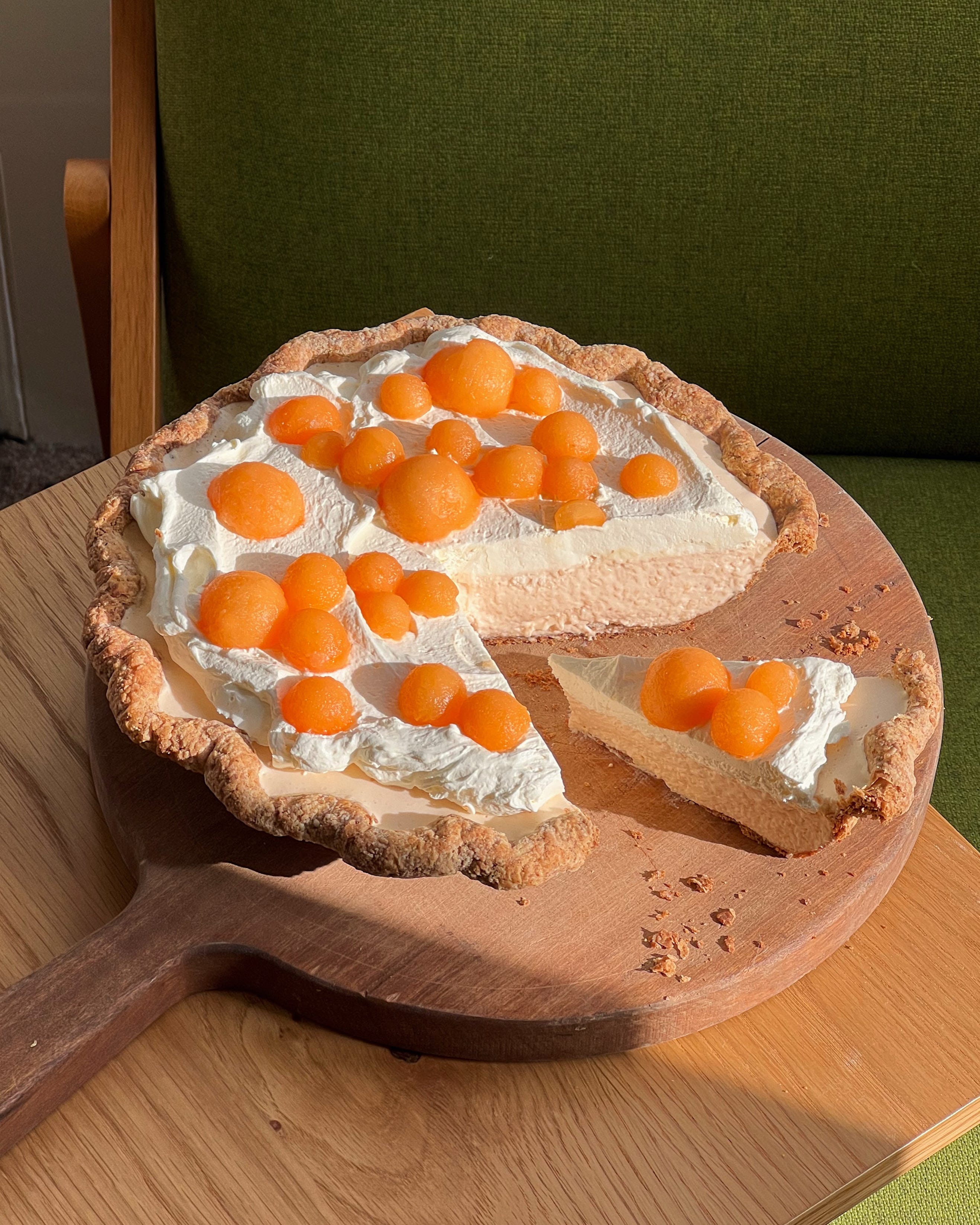
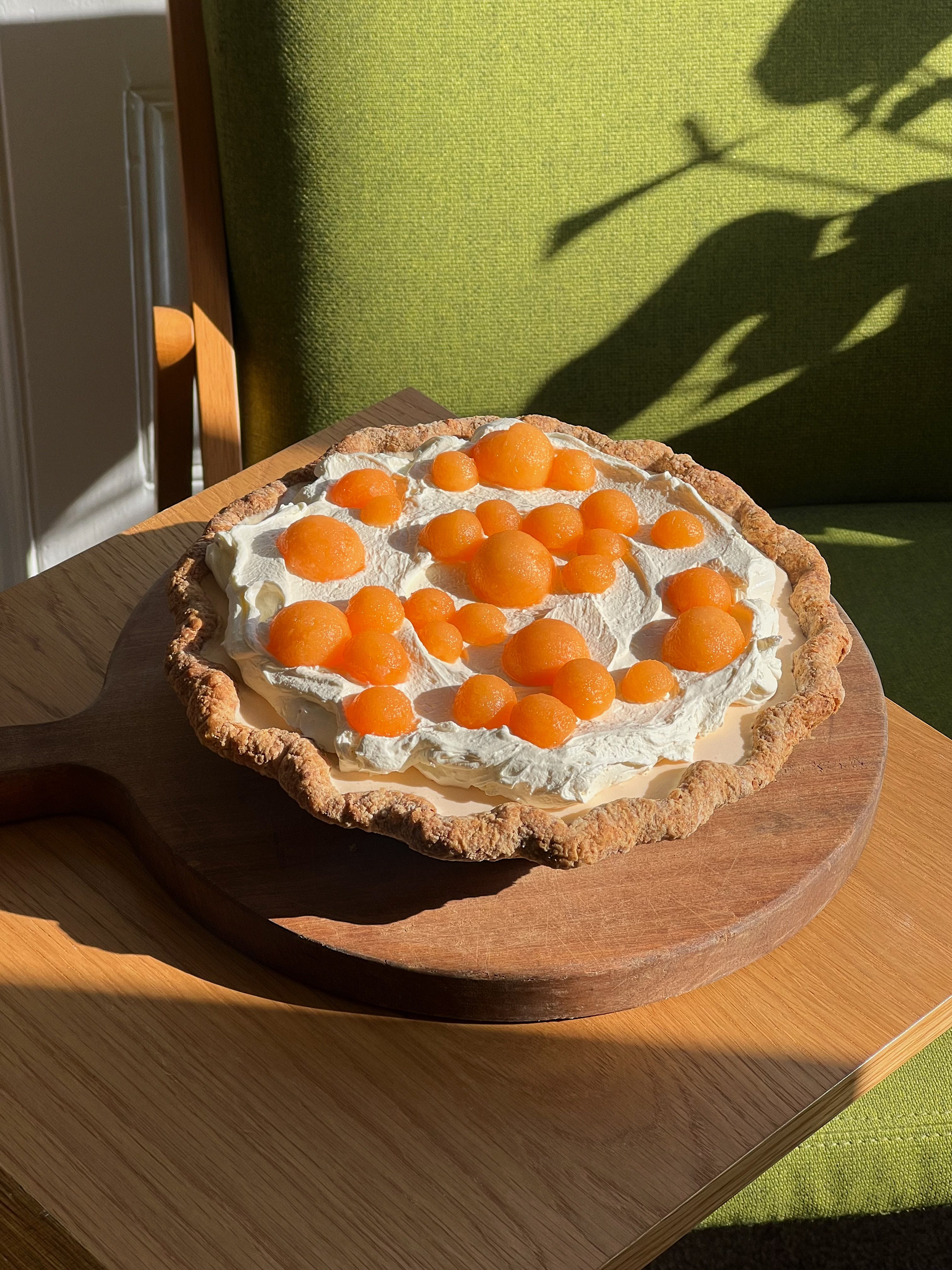
Please meet my Melon Chiffon Pie, where the delightful flavour of melon is complemented by the milkiness of cream.
Chiffon pie is a type of pie that I wasn’t really familiar with until a few months ago. I came across an old Jell-O ad promoting a new pie filling: light, airy, and very fun. In the following weeks, I went down a rabbit hole trying to understand what chiffon pie actually is. It was invented in Los Angeles in 1926 by pastry chef Monroe Boston Strause, known as the “Pie King,” as a light alternative to heavy, traditional pies. Strause used stiff egg whites and gelatine to create a mousse-like filling. As for the name, the story goes that when Strause first presented his mother with his new creation, she exclaimed that the smooth, light filling was “like chiffon.” Nowadays, there are many ways of making chiffon pie; with this iteration, I wanted to leave the eggs out. So instead of the classic egg whites, we’ll fold cream into our fruit base.
Some chiffon pies have a cookie crust, but today I’m showing you how to make pie dough. It’s a very versatile recipe that you can use for fruit pies like apple and cherry, as well as custard pies and pumpkin pie. For my pie dough, I use a mix of lard and butter, and both white and wholemeal flour, to create a more complex flavour. Feel free to swap the lard for more butter and the wholemeal flour for more white flour if you fancy.
How to choose melons
Quoting the fruit queen herself, Jane Grigson, good melons should feel heavy for their size. Weigh a couple that look similar, and choose the heavier one. A ripe melon will be slightly soft at the stalk end and will also have a delicious scent.
Baci, Alessandro x

CHIFFON MELON PIE

This dessert is an ode to summer and to my dad, whose favourite fruit is melon and who would happily eat whipped cream straight out of the bowl every day of his life. NB: you will need roughly two medium melons for both the filling and decoration.
For the Pie Dough:
(this yields two pie crusts, you’ll need just one for this recipe, freeze the other and use it whenever you want )
180g plain white flour
120g wholemeal flour
30g caster sugar
1 tsp fine sea salt (4g)
100g lard
120g unsalted butter
60g ice water
70g buttermilk
For the Filling:
550g Cantalope melon (peeled and chopped)
100g caster sugar
pinch of salt
¼ tsp of citric acid (or the juice of half a lemon)
8 platinum grade gelatine sheets
300g double cream
For the topping (optional) :
300g double cream
300g cantaloupe melon, in balls or thin slices
To make the pastry:
Freeze the butter in one block.
In the meantime, mix the plain flour, wholemeal flour, sugar, and salt.
Rub the lard into the flour mixture.
Then take the frozen butter block and grate it into the flour mixture using the large holes of a box grater. Mix again.
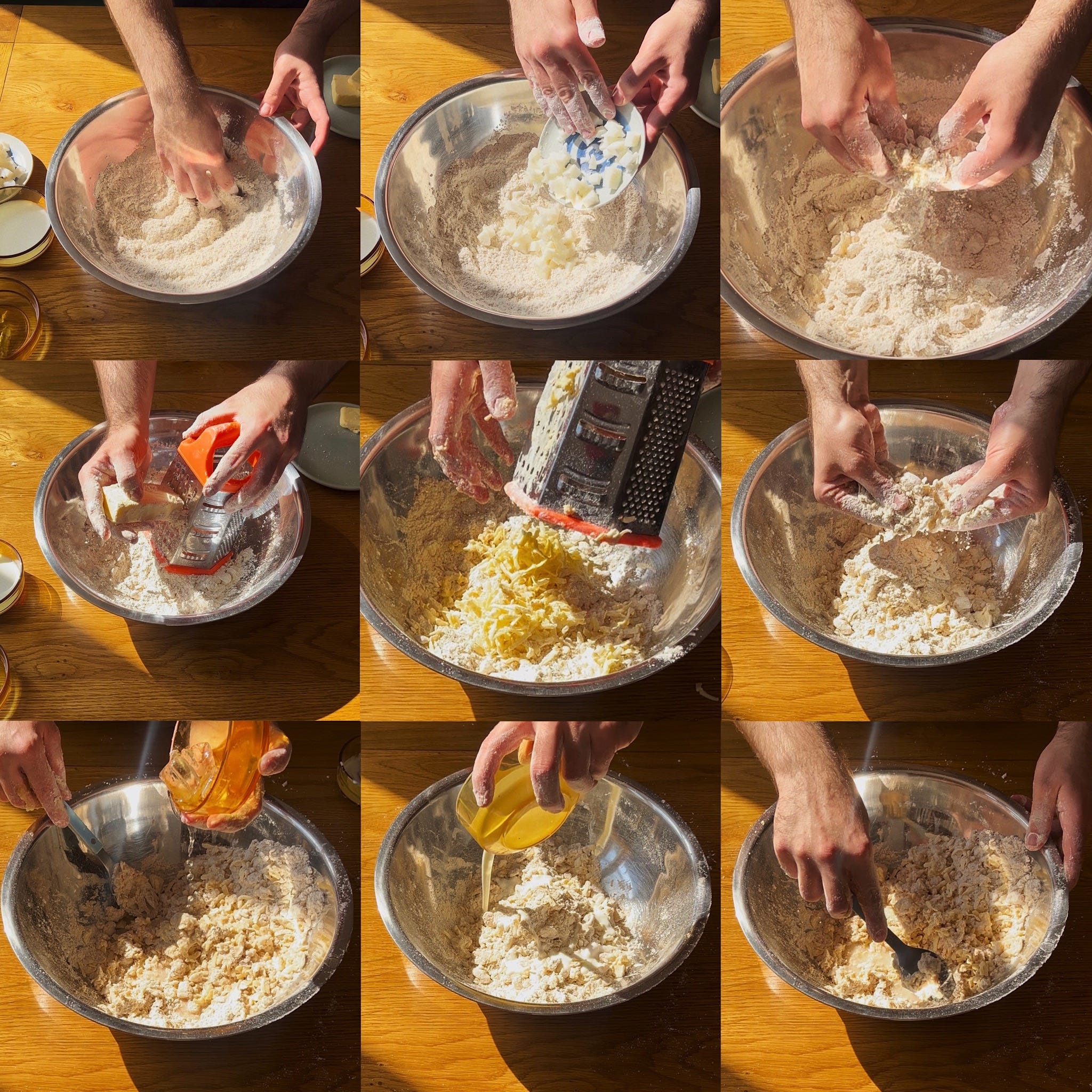
Add the ice-cold water and buttermilk bit by bit, mixing with a fork until a very loose, shaggy dough forms.
Turn it out onto a work surface and roll it into a long rectangle, then fold it in thirds — this is called a letter fold. Repeat once more.
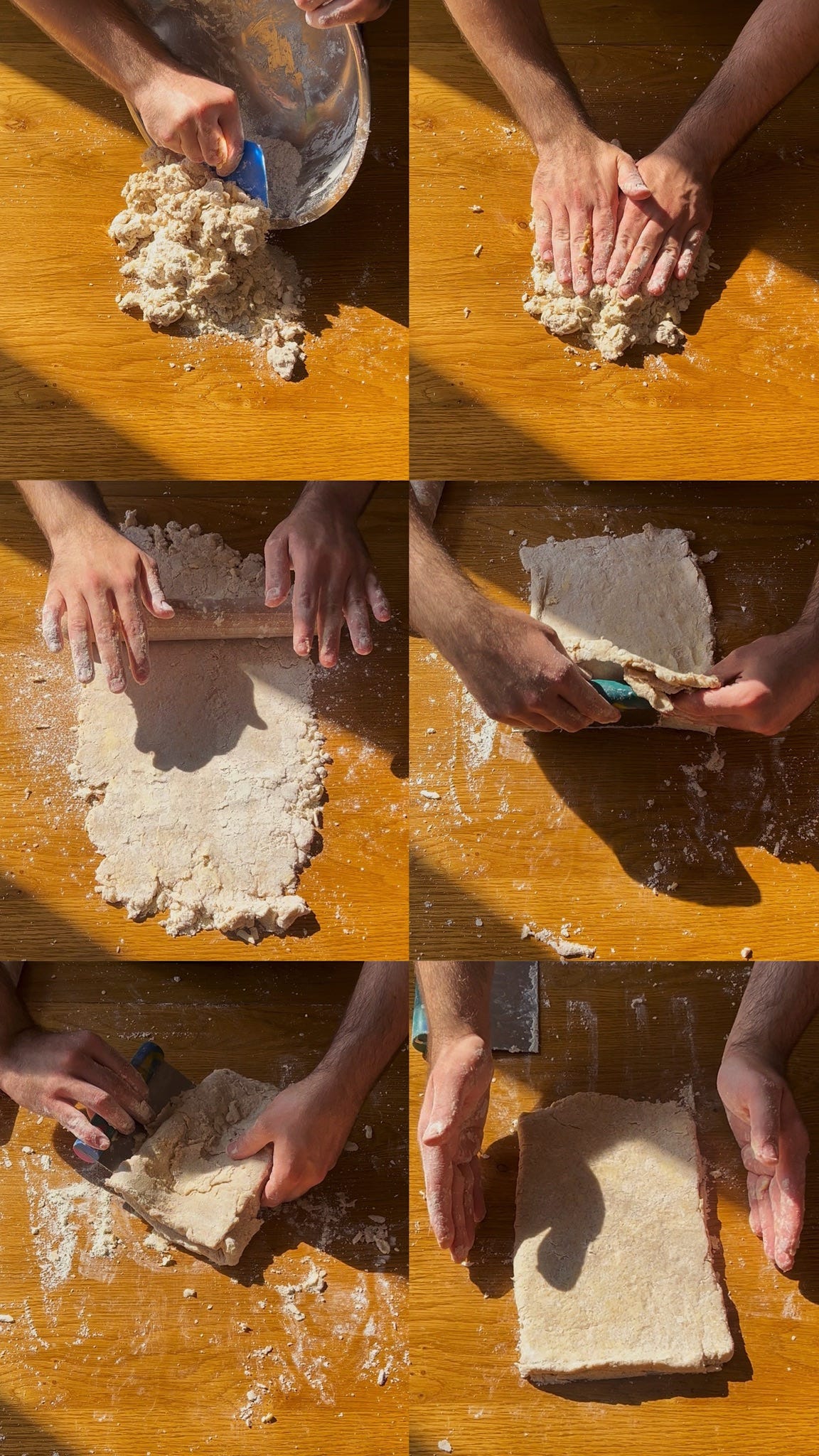
Divide the dough into 2 pieces and wrap each one in cling film.
Chill and rest for a minimum of 4 hours, preferably overnight. The dough can be kept in the fridge for 3 days or in the freezer for up to 2 months.
Take one of the dough portions out of the fridge and let it temper (sit at room temperature) for about 5 minutes.
Start rolling out the base of the pie with a rolling pin, dusting your work surface with plain flour as you go.
Roll it into a circle slightly larger than your pie dish.
Line the tin with the dough circle and use a pair of scissors to trim, leaving a 4 cm overhang. Tuck the overhang underneath itself all the way around so that you have a thicker border.
To crimp the dough, flour your fingertips and pinch the border with the thumb of one hand and the index finger and thumb of the other.
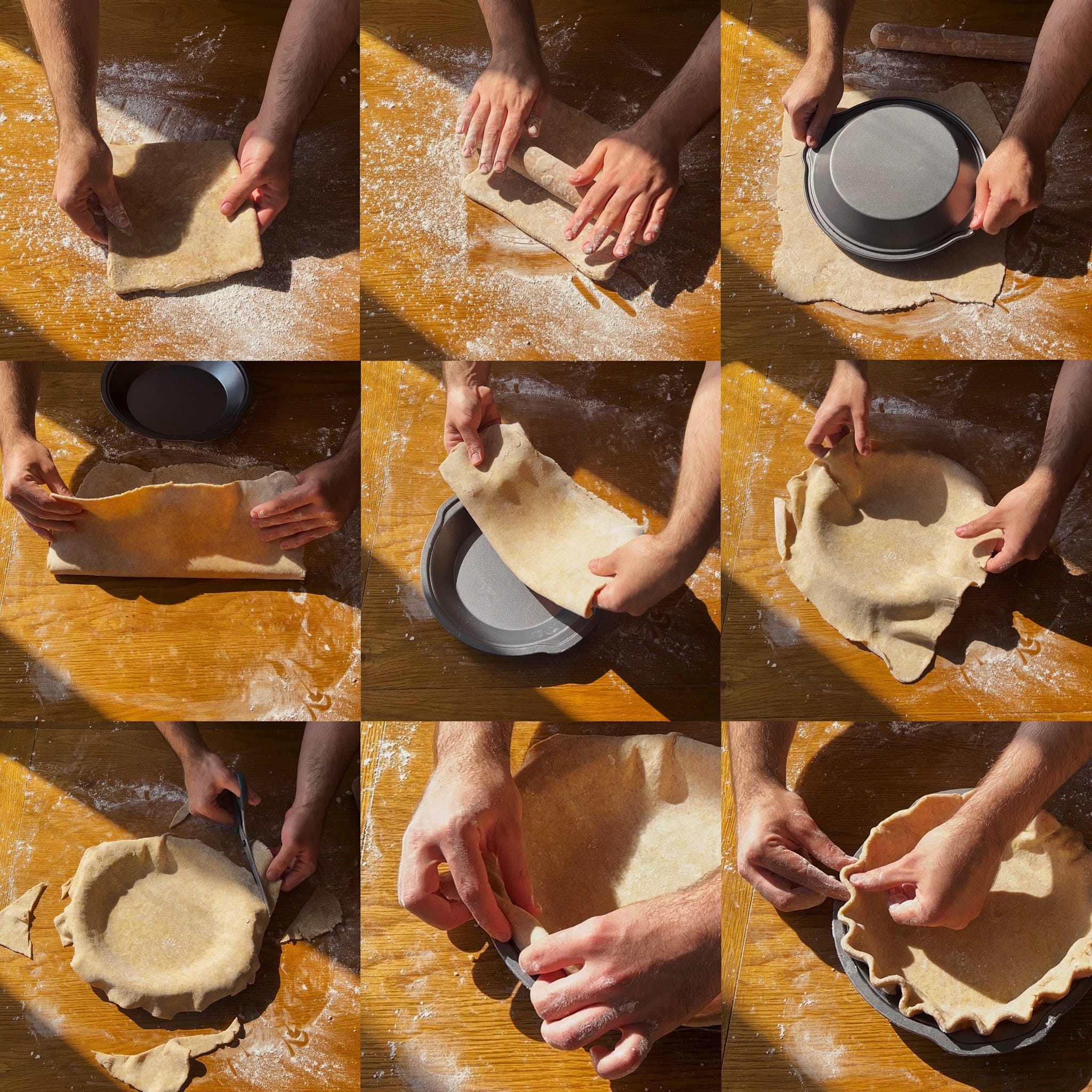
Freeze the lined pie plate for about 15 minutes and preheat the oven to 180C.
Prick the bottom of the pie with a fork, line it with a piece of parchment paper, and fill it with pie weights (you can use raw rice, baking beans or something else heavy and oven proof).
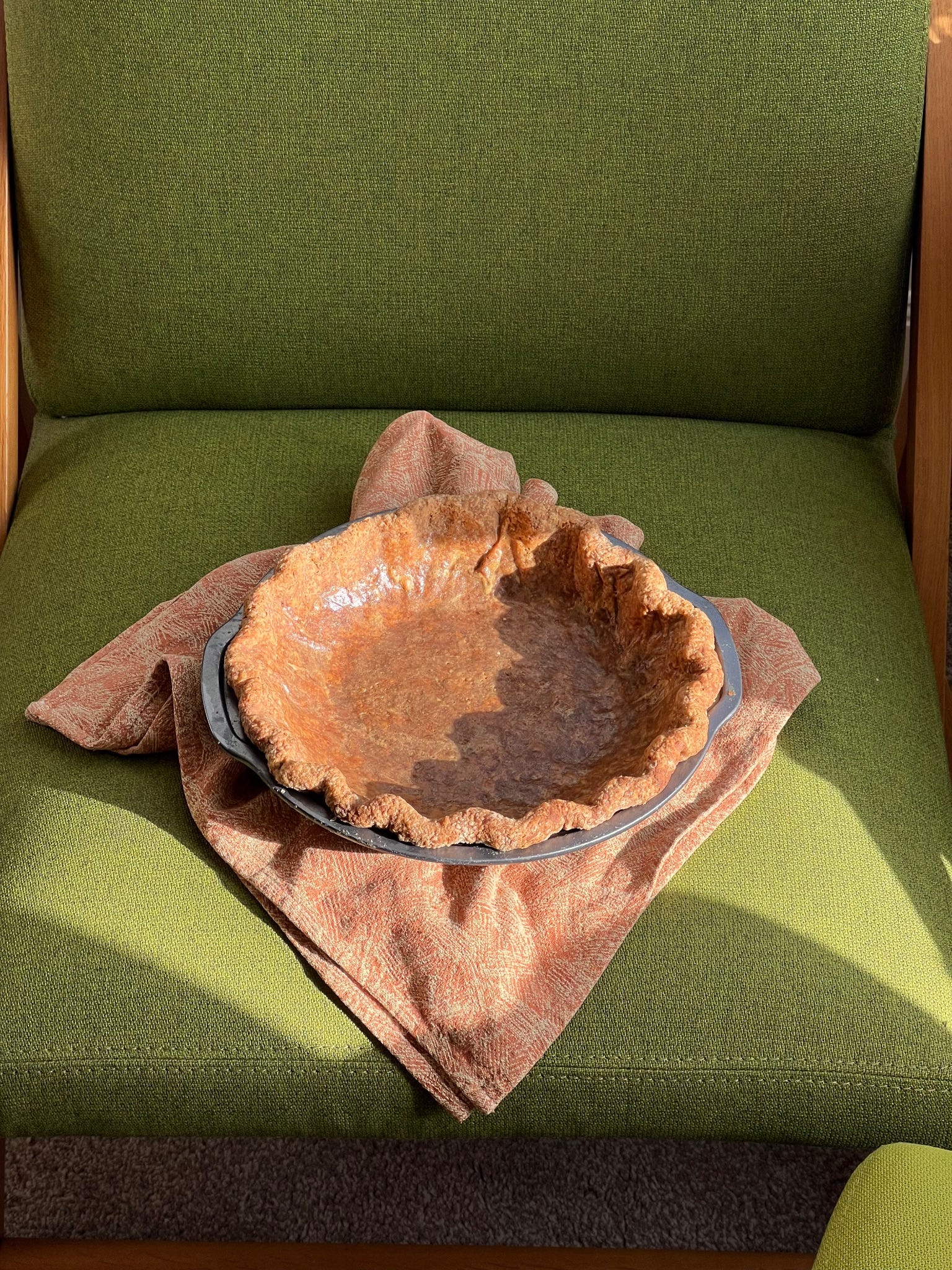
Bake in the centre of the oven for 25–30 minutes, until the bottom is no longer wet and shiny and the edges of the pie are starting to turn light golden brown.
Carefully remove the pie from the oven, lower the temperature to 170C, discard the pie weights and parchment paper, then return it to the oven and bake for 20 minutes longer, until it is golden brown all over.
Remove from the oven and let it cool completely.
To make the filling:
Start by soaking the gelatine sheets in a bowl of very cold water for 5–6 minutes.
In the meantime, using an immersion blender, blend together the chopped melon, sugar, salt, and citric acid until smooth.
Pass the mixture through a sieve and heat it gently in a small pot. Make sure not to bring it to a boil, as excessive heat can prevent the gelatine from performing at its best and will cook off some of the melon’s fresh aromas. If you have a thermometer, the mixture should reach around 60C (hot but not boiling).
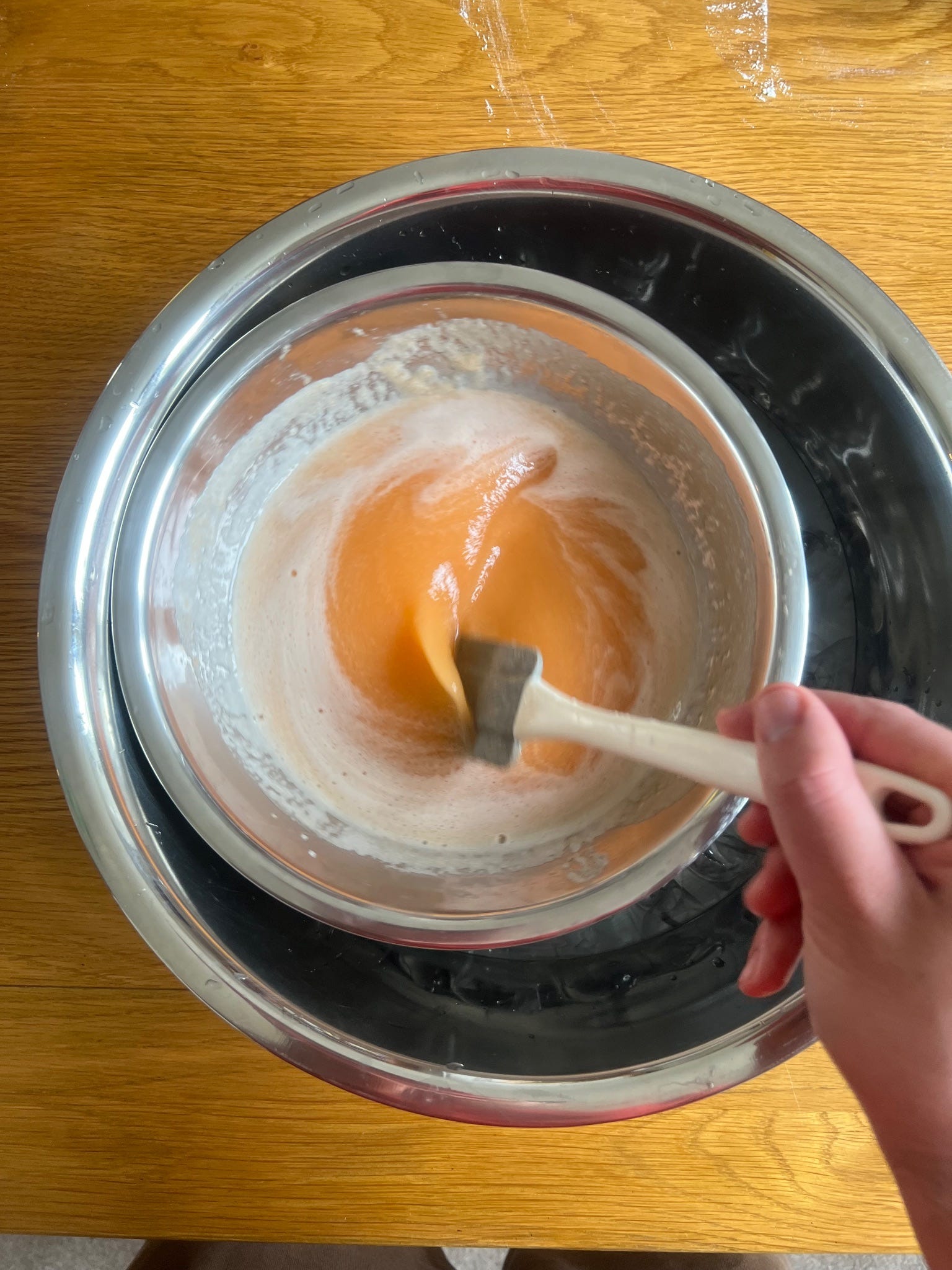
Squeeze the gelatine sheets to remove any excess water and add them to the pot with the warm melon mixture. Stir until fully melted and combined. Place the mixture in a bowl over an ice-water bath and stir occasionally until it cools and starts to thicken, about 5–6 minutes.
In the meantime, whip the double cream to very soft peaks.
Transfer the whipped cream to a bowl and set aside.
In a separate bowl, whip the cooled melon mixture, on medium-high speed, for about 5 minutes. At this point, gently fold the lightly whipped cream into the melon mixture.
Pour the filling into the baked pie dough and refrigerate until firm, at least 4 hours.
Remove from the fridge 15 minutes before serving. Top with more softly whipped cream and fresh melon. I made melon balls, but you can easily use thin slices instead. The pie is best served the day of but it will keep in the fridge for a few days.
Buon appetito!